
No products in the cart.
Return To Shop
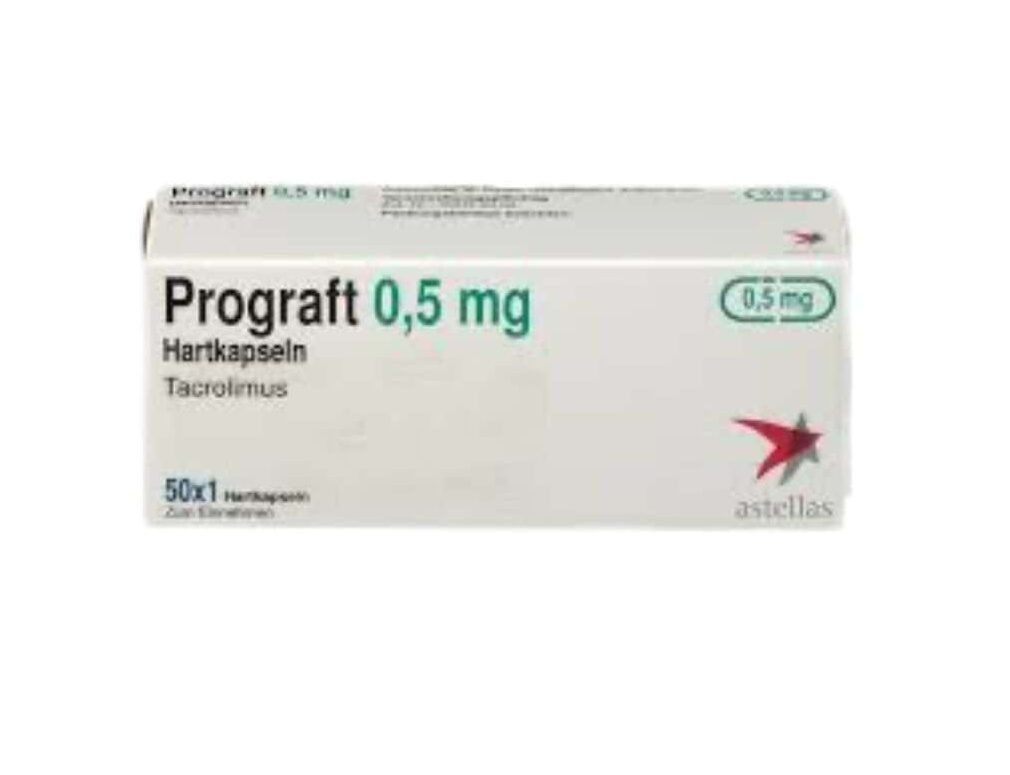
Prograf
Prograf (tacrolimus) is a calcineurin-inhibitor immunosuppressant used to prevent organ rejection in patients who have received a kidney, liver, heart, or lung transplant. It is available in 0.5 mg, 1 mg, and 5 mg capsules from our prescription medication catalog.
| Brand | Form | Price | Qty | Action |
|---|---|---|---|---|
| Prograf Brand | 0.5mg 50 Capsules | $109.00 | ||
| Prograf Brand | 1mg 100 Capsules | $348.70 | ||
| Prograf Brand | 5mg 50 Capsules | $885.00 |
Brand:Prograf Brand
Form:0.5mg 50 Capsules
Price:$109.00
Brand:Prograf Brand
Form:1mg 100 Capsules
Price:$348.70
Brand:Prograf Brand
Form:5mg 50 Capsules
Price:$885.00
US Name
Israeli Names
Active Ingredients
Brand Manufacturer
Manufacturer Location
Product Insert
US Name:
Prograf
Israeli Names:
Prograf
Active Ingredients:
Tacrolimus
Brand Manufacturer:
Astellas
Manufacturer Location:
Ireland
Product Insert:
Download
Prograf contains the active ingredient tacrolimus, a potent immunosuppressant manufactured by Astellas Pharma. First approved by the FDA in 1994, tacrolimus has become one of the most widely used anti-rejection medications worldwide and is considered a cornerstone of modern transplant medicine. Prograf is always used in combination with other immunosuppressants such as corticosteroids and mycophenolate to protect transplanted organs from the body’s immune response.
How Prograf Works
Tacrolimus belongs to a class of drugs called calcineurin inhibitors. It works by blocking the activity of calcineurin, a protein found inside T-lymphocytes (a type of white blood cell). Under normal circumstances, calcineurin activates T-cells to produce substances called lymphokines which trigger the immune system to attack foreign tissue. By inhibiting this process, Prograf effectively suppresses the immune response that would otherwise cause the body to reject a transplanted organ. This mechanism is similar to ciclosporin (cyclosporine), another calcineurin inhibitor, though clinical studies have shown tacrolimus to be more potent on a milligram-per-milligram basis. Patients managing other aspects of their post-transplant health may also explore our heart health medications section.
Clinical Effectiveness
Prograf’s efficacy in preventing organ rejection has been established through multiple randomized controlled trials in kidney, liver, and heart transplant recipients. In kidney transplant studies, tacrolimus-based regimens demonstrated lower rates of acute rejection compared to cyclosporine-based protocols.
In two major liver transplant trials — one conducted in the United States and one in Europe — tacrolimus combined with corticosteroids showed favorable outcomes in both adult and pediatric patients. For heart transplant patients, clinical data similarly supports tacrolimus as an effective foundation for immunosuppressive therapy. More recently, Prograf has also received FDA approval for use in lung transplant recipients. Patients who are also managing conditions related to their transplant, such as new-onset diabetes, should work closely with their transplant team to balance treatment goals.
Dosing Guidelines
Prograf dosing is highly individualized and depends on the type of organ transplanted, time since transplant, concurrent medications, and the patient’s blood levels of tacrolimus. For kidney transplant patients, the typical initial oral dose is 0.2 mg/kg/day divided into two doses taken every 12 hours. For liver transplant patients, the recommended starting dose is 0.10 to 0.15 mg/kg/day, also divided into two doses. Heart transplant patients usually start at 0.075 mg/kg/day in two divided doses. Lung transplant recipients may require similar dosing, though patients with cystic fibrosis often need higher doses due to reduced bioavailability of oral tacrolimus.
Capsules should be taken consistently either with or without food — but the same approach should be used each time because food can affect how much tacrolimus the body absorbs. Grapefruit and grapefruit juice must be avoided as they can significantly increase tacrolimus blood levels. Therapeutic drug monitoring through regular blood tests is required throughout treatment, and doses are adjusted based on trough concentrations to maintain effective immunosuppression while minimizing toxicity.
Who Should Not Take Prograf
Prograf is contraindicated in patients with a known hypersensitivity to tacrolimus. The injectable formulation is also contraindicated in patients allergic to HCO-60 (polyoxyl 60 hydrogenated castor oil). Tacrolimus should not be used simultaneously with cyclosporine — if switching between the two drugs, at least 24 hours must pass after discontinuing one before starting the other. Patients with pre-existing kidney impairment should receive doses at the lower end of the recommended range due to tacrolimus’s potential for nephrotoxicity.
The medication should be prescribed only by physicians experienced in immunosuppressive therapy, and patients should be managed at facilities with adequate laboratory and medical resources. Patients taking Imuran (azathioprine) or other immunosuppressants as part of their regimen should have all medications carefully coordinated by their transplant team.
Comparing Prograf to Other Immunosuppressants
Prograf is frequently compared to cyclosporine, the other major calcineurin inhibitor used in transplant medicine. While both drugs work through a similar mechanism, tacrolimus has generally shown superior efficacy in preventing acute rejection episodes across organ types. However, the side effect profiles differ — tacrolimus is more commonly associated with new-onset diabetes and neurotoxicity, while cyclosporine tends to cause more cosmetic side effects like gum overgrowth and excessive hair growth. Other immunosuppressive medications used alongside Prograf include Plaquenil for autoimmune conditions and Copaxone for immune modulation in different clinical contexts. Our blog on prediabetes and type 2 diabetes may also be helpful for transplant patients monitoring their metabolic health.
Storage and Handling
Store Prograf capsules at room temperature (77°F / 25°C), with excursions permitted between 59°F and 86°F (15°C to 30°C). Keep capsules in the original aluminum packaging and protect them from moisture and light. Tacrolimus can cause harm to a developing fetus, so appropriate handling precautions should be followed.
Buying Prograf Online
If you’re looking to buy Prograf online or order medication online at a lower price, licensed international pharmacies can provide significant savings. At our online pharmacy, Prograf is available in 0.5 mg, 1 mg, and 5 mg capsules from the original Astellas manufacturer. All orders over $150 ship free, and medications are sourced exclusively from licensed dispensaries.
| Brand | Prograf Brand |
|---|---|
| Form | 0.5mg 50 Capsules, 1mg 100 Capsules, 5mg 50 Capsules |
As a powerful immunosuppressant, Prograf (tacrolimus) carries a significant side effect profile that requires ongoing monitoring by your transplant team. Side effects can vary depending on the type of transplant and the other medications you're taking.
Very common side effects (reported in 30% or more of patients in clinical trials) include tremor, headache, diarrhea, high blood pressure, nausea, abnormal kidney function, abdominal pain, insomnia, high blood sugar, high potassium levels, low magnesium levels, and anemia. Many of these may improve with dose adjustments.
Less common side effects include dizziness, constipation, vomiting, back pain, urinary tract infections, peripheral edema, joint pain, and changes in cholesterol or phosphate levels.
Serious side effects requiring immediate medical attention include signs of kidney damage (decreased urination, swelling), neurological symptoms such as confusion, visual disturbances, or seizures which may indicate posterior reversible encephalopathy syndrome (PRES), signs of infection (fever, persistent sore throat, unusual fatigue), new-onset diabetes, QT prolongation, and any signs of lymphoma or skin cancer. Patients should also be aware that long-term immunosuppression increases susceptibility to bacterial, viral, fungal, and opportunistic infections.
Prograf (tacrolimus) is FDA-approved as a calcineurin-inhibitor immunosuppressant for the following indications:
Kidney Transplant: Prograf is indicated for the prevention of organ rejection in adult and pediatric patients receiving an allogeneic (donor) kidney transplant. It is used in combination with other immunosuppressants including mycophenolate mofetil and corticosteroids, often with induction therapy.
Liver Transplant: Tacrolimus is indicated for preventing rejection in adult and pediatric patients who have received a liver transplant. Clinical efficacy was demonstrated in two major randomized trials comparing tacrolimus-based regimens to cyclosporine-based protocols.
Heart Transplant: Prograf is approved for preventing rejection following allogeneic heart transplantation in adults and pediatric patients, used alongside corticosteroids and other immunosuppressive agents.
Lung Transplant: The most recently added indication, Prograf is approved for preventing organ rejection in adult and pediatric patients who have received an allogeneic lung transplant. Patients with cystic fibrosis may require dose adjustments due to altered bioavailability of oral tacrolimus.
In all transplant types, Prograf must be used in combination with other immunosuppressants and under the supervision of physicians experienced in transplant medicine.
How does Prograf prevent organ rejection?
Prograf works by inhibiting calcineurin, a protein inside T-lymphocytes that triggers the immune system to attack transplanted tissue. By suppressing this response, tacrolimus helps prevent the body from rejecting the new organ. It is always used with other immunosuppressants for the best protection.
Why do I need regular blood tests while taking Prograf?
Tacrolimus has a narrow therapeutic window, meaning the difference between an effective dose and a toxic dose is small. Regular blood tests measure your tacrolimus trough levels to make sure the drug is within the target range — too low and you risk rejection, too high and side effects like kidney damage become more likely.
Can I eat grapefruit while taking Prograf?
No. Grapefruit and grapefruit juice are strong inhibitors of CYP3A4, the enzyme that metabolizes tacrolimus. Consuming grapefruit can significantly raise tacrolimus levels in your blood, increasing the risk of serious side effects. Avoid all grapefruit products while on this medication.
Can I buy Prograf online?
Yes. You can order Prograf from a licensed online pharmacy at competitive prices. We carry the original Astellas-manufactured Prograf in 0.5 mg, 1 mg, and 5 mg capsules, with free delivery on orders over $150.
Is Prograf the same as extended-release tacrolimus?
No. Prograf is the immediate-release formulation of tacrolimus, taken twice daily. Extended-release tacrolimus products (such as Envarsus XR or Astagraf XL) are taken once daily and are not interchangeable with Prograf. Switching between formulations must be done under physician supervision with close monitoring of blood levels.


Reviews
There are no reviews yet.