
No products in the cart.
Return To Shop
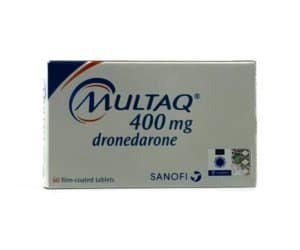
Multaq
Multaq (dronedarone) is an antiarrhythmic medication used to reduce the risk of hospitalization in patients with a history of atrial fibrillation or atrial flutter who are currently in normal heart rhythm. It is available as 400 mg film-coated tablets in our heart health medications section.
| Brand | Form | Price | Qty | Action |
|---|---|---|---|---|
| Droncor Generic | 400mg 60 Tablets | $135.00 | - | |
| Multaq Brand | 400mg 60 Tablets | $155.00 | - |
Brand:Droncor Generic
Form:400mg 60 Tablets
Price:$135.00
Status:OUT OF STOCK
Brand:Multaq Brand
Form:400mg 60 Tablets
Price:$155.00
Status:OUT OF STOCK
US Name
Israeli Names
Active Ingredients
Brand Manufacturer
Manufacturer Location
Product Insert
US Name:
Multaq
Israeli Names:
Multaq
Active Ingredients:
Dronedarone
Brand Manufacturer:
Sanofi-Aventis
Manufacturer Location:
France
Product Insert:
Download
Multaq contains the active ingredient dronedarone, an antiarrhythmic drug manufactured by Sanofi-Aventis. First approved by the FDA in 2009, dronedarone was developed as a structurally modified version of amiodarone, one of the most effective but also most toxic antiarrhythmic agents available. Multaq was designed to retain the antiarrhythmic benefits of amiodarone while reducing the risk of organ toxicity, particularly to the thyroid, lungs, and liver.
How Multaq Works
Dronedarone has a complex mechanism of action that affects multiple ion channels in the heart. It blocks sodium, potassium, and calcium channels, and it also has anti-adrenergic properties. By acting on these pathways, Multaq helps stabilize the electrical activity of the heart and maintain a normal sinus rhythm after cardioversion (a procedure that restores normal heart rhythm). Unlike amiodarone, dronedarone does not contain iodine in its chemical structure which is why it carries a significantly lower risk of thyroid complications. Patients managing cardiovascular conditions may also want to explore other medications in our heart health medications catalog.
Clinical Effectiveness
The clinical benefit of Multaq was primarily established in the ATHENA trial, a large placebo-controlled study involving over 4,600 patients with atrial fibrillation or atrial flutter. This study demonstrated that dronedarone significantly reduced the combined endpoint of cardiovascular hospitalization or death from any cause. The reduction in hospitalization was largely driven by fewer admissions related to atrial fibrillation recurrence. However, a separate study (PALLAS) in patients with permanent atrial fibrillation found that dronedarone actually increased the risk of cardiovascular events in that population, which is why Multaq is strictly contraindicated in permanent AF. For patients also managing their blood pressure, it’s important that all cardiac medications are coordinated by a physician.
Dosing Guidelines
The recommended dose of Multaq is 400 mg taken twice daily — once with the morning meal and once with the evening meal. Taking dronedarone with food significantly increases its absorption, so it should always be administered with a meal. If a dose is missed, patients should take the next dose at the regularly scheduled time and should not double up. Grapefruit juice must be avoided as it can increase dronedarone blood levels through CYP3A4 inhibition.
Patients should not stop taking Multaq without consulting their doctor first, as sudden discontinuation could lead to recurrence of atrial fibrillation. Before starting treatment, your physician should confirm that you are in normal sinus rhythm, and appropriate antithrombotic therapy (such as blood thinners) should be in place. Patients who are also taking Xarelto or Eliquis for stroke prevention related to AFib should ensure their anticoagulation therapy is properly managed alongside Multaq.
Who Should Not Take Multaq
Multaq is contraindicated in several important patient groups. It must not be used in patients with permanent atrial fibrillation (who cannot or will not be restored to normal sinus rhythm), as clinical trials showed increased cardiovascular risks in this population including a higher rate of stroke and heart failure hospitalizations. It is also contraindicated in patients with NYHA Class IV heart failure or Class II–III heart failure with a recent decompensation requiring hospitalization.
Other contraindications include severe liver impairment, a QTc Bazett interval of 500 ms or greater, a PR interval greater than 280 ms, second- or third-degree heart block, and a resting heart rate below 50 bpm without a pacemaker. Multaq should not be used alongside strong CYP3A4 inhibitors (such as ketoconazole, ritonavir, or clarithromycin) or other Class I or III antiarrhythmic drugs. Pregnant women must not take Multaq, as animal studies showed the drug can cause fetal harm. Patients who have experienced liver toxicity related to previous amiodarone use should also avoid dronedarone.
Comparing Multaq to Other Antiarrhythmics
Multaq occupies a unique position among antiarrhythmic drugs. Compared to amiodarone, it is less effective at maintaining sinus rhythm but carries a much more favorable side effect profile — particularly the absence of thyroid, pulmonary, and ocular toxicities. Other antiarrhythmics used for atrial fibrillation include flecainide and propafenone (Class IC agents) and sotalol and dofetilide (other Class III agents). The choice between these medications depends on the patient’s underlying heart condition, kidney function, and other risk factors. Patients who also take heart rate-controlling medications like Coralan (ivabradine) should be aware that dronedarone can interact with drugs that slow heart rate. Our blog on blood pressure treatment comparisons may also provide useful background for patients managing multiple cardiac medications.
Storage and Handling
Store Multaq tablets at room temperature between 68°F and 77°F (20°C to 25°C), with brief excursions allowed between 59°F and 86°F. Keep the tablets in their original packaging and away from moisture. As with all prescription medications, store out of the reach of others.
Buying Multaq Online
If you’re looking to buy Multaq online or order prescription medication at a more affordable price, licensed international pharmacies can offer meaningful savings. At our online pharmacy, Multaq is available as both the brand-name Sanofi product and the Droncor generic, each containing 400 mg of dronedarone in 60-tablet packs. Orders over $150 ship free, and all products are sourced from licensed dispensaries.
| Brand | Droncor Generic, Multaq Brand |
|---|---|
| Form | 400mg 60 Tablets |
Like all antiarrhythmic medications, Multaq (dronedarone) can cause side effects. Most are mild and gastrointestinal in nature, but some require close monitoring by your healthcare provider.
Common side effects (reported in 2% or more of patients in clinical trials) include diarrhea, nausea, abdominal pain, vomiting, indigestion, fatigue, weakness, and bradycardia (slow heart rate). Gastrointestinal symptoms are the most frequent reason patients discontinue treatment.
Less common side effects include skin reactions such as rash, itching, eczema, and dermatitis. Photosensitivity (increased sensitivity to sunlight) and dysgeusia (altered taste) have also been reported at an incidence below 1%. Small increases in serum creatinine (about 0.1 mg/dL) are common shortly after starting treatment — this is caused by inhibition of tubular secretion rather than actual kidney damage and typically reverses if the drug is stopped.
Serious side effects that require immediate medical attention include signs of liver injury (loss of appetite, nausea, vomiting, fever, dark urine, jaundice, unusual fatigue, or right upper abdominal pain), worsening heart failure symptoms (sudden weight gain, swelling in the legs, or increasing shortness of breath), new or worsening irregular heartbeat, QT prolongation, and pulmonary toxicity. In the PALLAS trial involving permanent AF patients, dronedarone was associated with increased rates of stroke and cardiovascular death — reinforcing the importance of only using Multaq in the approved patient population.
Multaq (dronedarone) is FDA-approved for the following indication:
Reduction of Cardiovascular Hospitalization in Atrial Fibrillation/Flutter: Multaq is indicated to reduce the risk of cardiovascular hospitalization in patients with paroxysmal or persistent atrial fibrillation (AF) or atrial flutter (AFL) who have had a recent episode of AF/AFL and have associated cardiovascular risk factors. These risk factors include age over 70, hypertension, diabetes, prior cerebrovascular accident, left atrial diameter of 50 mm or greater, or left ventricular ejection fraction below 40%. The patients must be in sinus rhythm at the time treatment is started, or they should be cardioverted before initiation.
Important Limitations: Multaq is contraindicated in patients with permanent atrial fibrillation. The PALLAS trial demonstrated that dronedarone increased the risk of major cardiovascular events — including stroke, heart failure hospitalization, and cardiovascular death — in this population. Multaq is also not indicated for patients with NYHA Class IV heart failure or hemodynamically unstable Class II–III heart failure. Due to its safety profile, dronedarone should only be prescribed by physicians familiar with the management of cardiac arrhythmias and the specific patient selection criteria for this medication.
What is the difference between Multaq and amiodarone?
Multaq (dronedarone) was developed as a modified version of amiodarone. The key difference is that dronedarone does not contain iodine, which means it carries a much lower risk of thyroid, lung, and eye toxicity compared to amiodarone. However, amiodarone is generally considered more effective at maintaining normal heart rhythm. Your cardiologist can help determine which drug is more appropriate for your situation.
Why can't I take Multaq if I have permanent atrial fibrillation?
A clinical trial (the PALLAS study) showed that dronedarone increased the risk of stroke, heart failure hospitalization, and cardiovascular death in patients with permanent atrial fibrillation. For this reason the FDA restricts Multaq to patients who have had episodes of AF in the past but are currently in normal sinus rhythm or who can potentially be converted back to normal rhythm.
Do I need to take Multaq with food?
Yes. Multaq should always be taken with a meal because food significantly increases the absorption of dronedarone. Take one 400 mg tablet with your morning meal and one with your evening meal. Avoid grapefruit juice entirely while on this medication.
Can I buy Multaq online?
Yes, you can order Multaq from a licensed online pharmacy at competitive pricing. We offer both the brand-name Multaq by Sanofi and the Droncor generic equivalent in 400 mg tablets, with free shipping on orders over $150.
What blood tests are needed while taking Multaq?
Your doctor will likely monitor your liver function through periodic blood tests, particularly during the first several months of treatment. Kidney function and electrolyte levels (especially potassium and magnesium) should also be checked regularly, as imbalances can increase the risk of heart rhythm problems. An ECG will typically be performed before starting treatment and periodically thereafter to monitor your QT interval.


Reviews
There are no reviews yet.